The Lonedog Methodology: How Readiness, Performance, and Recovery Build Unstoppable Fitness
Why Most Fitness Programs Miss the Mark
Let's talk about why your fitness journey keeps stalling.
You've tried different gyms in Albury-Wodonga. You've followed programs. You've pushed yourself hard. But the results don't stick. Or worse, you get injured. Or burned out. Or you just stop seeing progress.
It’s because most fitness programs focus on one thing and ignore everything else.
They push workouts without considering nutrition.
They obsess over food while ignoring recovery.
They track weight but miss the bigger picture.
They program exercises but don't account for daily stress.
Your body doesn't work in isolation. It's an integrated system where everything affects everything else.
The workout program that ignores your stress levels will eventually break you.
The nutrition plan that doesn't account for your training load will fail.
The recovery protocol that doesn't adapt to your life demands isn't actually recovery.
At Lonedog, we built our methodology around a simple truth:
Sustainable fitness requires three interconnected pillars working together.
Not one. Not two. All three.
This is how we help members in Albury-Wodonga build unstoppable fitness—without the burnout, injury, or plateau that plague most programs.
The Three-Pillar Framework
The Lonedog Methodology isn't complicated. It's comprehensive.
Three pillars. Three questions. Every single day.
Pillar 1: Readiness
The Question: Is your body ready for what we're asking it to do today?
Pillar 2: Performance
The Question: What can your body actually do when we train it intelligently?
Pillar 3: Recovery
The Question: What does your body need to adapt and improve?
When all three work together, you get consistent progress without breaking down. When any one is ignored, the whole system fails.
Let's break down each pillar and how they interact.
Pillar 1: Readiness — Training With Your Body, Not Against It
Readiness is the foundation. Without it, everything else crumbles.
What Is Readiness?
Your body's capacity to handle stress changes every single day.
Some mornings you wake up energised, well-rested, mentally sharp. Other mornings you drag yourself out of bed after poor sleep, already stressed about the day ahead.
Traditional fitness programs ignore this completely. Monday's program is Monday's program, regardless of how you feel.
Lonedog's approach: We measure your readiness and adapt your training to match your actual capacity.
The Three Types of Readiness
Movement Readiness
How does your body feel physically today?
Any pain, stiffness, or limitation?
Range of motion available?
Joint health status?
Nutrition Readiness
Are you properly fuelled for training?
Hydration status?
Energy availability?
Digestive health?
Life Readiness
Sleep quality last night?
Current stress levels?
Mental state?
Recovery from previous sessions?
All three types feed into your daily training decision.
How We Measure Readiness at Lonedog
We don't use complex technology or expensive devices. We use proven assessment methods that work:
Subjective Markers
How you slept
How you feel
Energy levels
Stress perception
Muscle soreness
Objective Markers
Movement screening
Grip strength
Heart rate variability (when appropriate)
Performance on warm-up exercises
The Readiness Spectrum
We think of readiness on a spectrum:
High Readiness (Green):
Well-rested
Low stress
Good energy
No pain or stiffness
Ready to push hard
Moderate Readiness (Yellow):
Decent sleep
Manageable stress
Moderate energy
Minor soreness
Train smart with modifications
Low Readiness (Red):
Poor sleep
High stress
Low energy
Significant soreness or pain
Focus on recovery and movement quality
Your training adapts based on where you fall on this spectrum each day.
Why This Matters for Albury-Wodonga
Life in regional Australia doesn't follow a predictable pattern.
You're a tradie who had a brutal week of physical work. A parent dealing with sick kids and broken sleep. A professional managing a high-stress project. A shift worker whose schedule changes weekly.
Most programs that ignore these realities will always fail. Readiness-based training acknowledges that your life impacts your capacity—and adapts accordingly.
Janelle Pigdon
From Running around the block to the Marathon in Athens
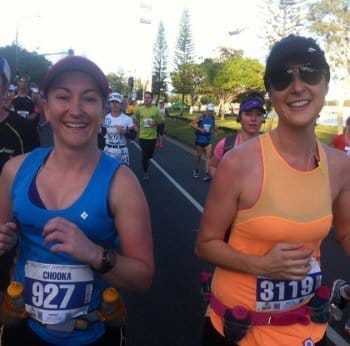
“I’ve gone from the pink kettlebell (8 kg) to the blue (20 kg) for some sessions... I completed three full marathons... in Canberra, Gold Coast and finally Athens in Greece…… The home of the marathon.”
Pillar 2: Performance — What Your Body Can Actually Do
Once we know your readiness, we focus on performance. Not in the Instagram sense. In the real sense.
Redefining Performance
Most people hear “performance” and think of athletics. Competitions. PRs. Elite training.
At Lonedog, performance means something broader: What can YOUR body do?
Performance exists on a continuum:
Daily tasks (walking, carrying groceries, getting up from the floor)
Work requirements (physical labour, long hours on feet)
Recreational activities (hiking the Murray River trails, playing with kids)
Sport pursuits (weekend footy, running, kettlebell sport)
We want to take you from wherever you are on that continuum and move you toward where you want to be.
The Performance Development System
Performance at Lonedog follows a clear progression:
Stage 1: Foundation
Master basic movement patterns
Build work capacity
Develop body awareness
Establish training consistency
Stage 2: Development
Add load progressively
Increase training density
Expand movement vocabulary
Build-specific capacities
Stage 3: Refinement
Optimise technique
Peak performance for goals
Maintain while progressing
Integrate advanced methods
Most members live in Stage 2 for months or years. That's where the magic happens—consistent, sustainable progress.
Movement Readiness Within Performance
Here's where the pillars interconnect.
Performance isn't just about what exercise you do. It's about HOW your body does it.
Movement Readiness asks:
Can you perform this movement pain-free?
Do you have the mobility required?
Is your form maintaining quality?
Are you compensating anywhere?
We don't force movements your body isn't ready for. We don't program exercises that aggravate existing issues. We don't push through pain-through positions.
Pain-free progression adapted to your body
Custom exercise selection based on your patterns
Natural strength building without forced positions
This is why Lonedog members progress consistently without the injury setbacks that plague generic programs.
Real Performance Outcomes
Let's talk about what actually happens when you train with readiness-adapted performance programming.
For Beginners:
Learning foundational movements without overwhelm
Building confidence through progressive success
Establishing the movement patterns that support everything else
Experiencing fitness without intimidation or injury
For Intermediate Trainees:
Consistent strength gains month after month
Body composition changes that stick
Movement quality that carries into daily life
Performance improvements in work and recreation
For Advanced Athletes:
Peak performance for competition
Sustainable training volume without burnout
Technical mastery of complex skills
Long-term athletic development
Pillar 3: Recovery — The Missing Link in Most Programs
Recovery isn't rest. Recovery is adaptation.
Why Recovery Matters More Than You Think
Here's what most people misunderstand: you don't get stronger during workouts. You get stronger during recovery.
Training provides stimulus. Recovery provides adaptation.
Without proper recovery:
Your body can't repair tissue damage
Nervous system stays stressed
Performance stagnates or declines
Injury risk skyrockets
Motivation disappears
Yet most fitness programs treat recovery as an afterthought. “Take a rest day when you need it.” That's not a recovery strategy. That's hoping for the best.
The Lonedog Recovery Framework
Recovery at Lonedog is proactive, not reactive.
Active Recovery
Movement quality sessions on lower intensity days
Mobility work
Light cardiovascular activity
Technique practice
Passive Recovery
Sleep optimisation
Stress management
Nutrition for adaptation
True rest days when needed
Recovery Monitoring
How you're responding to training load
Soreness patterns
Energy and motivation levels
Performance trends
Recovery Adapts to Your Life
Here's where the Albury-Wodonga context matters.
Your recovery needs aren't just about training. They're about everything:
Physical Demands
Manual labour job?
Long commute?
Active kids?
Weekend sport?
Mental/Emotional Demands
High-stress work?
Family responsibilities?
Financial pressures?
Life transitions?
Environmental Factors
Seasonal temperature extremes
Albury's summer heat impacting sleep
Winter cold requiring more warm-up
Changing daylight affecting energy
We account for all of it. Because your stress cup holds ALL stress—not just training stress.
The Stress Cup Analogy
Think of your body's stress capacity as a cup.
The cup can hold a certain amount of total stress before it overflows (burnout, injury, illness).
What fills the cup:
Training stress
Work stress
Relationship stress
Financial stress
Sleep deprivation
Poor nutrition
Environmental stress (heat, cold, etc.)
What empties the cup:
Quality sleep
Good nutrition
Active recovery
Passive rest
Stress management
Positive relationships
Time in nature
Most programs only pay attention to training stress. We monitor the whole cup.
When your cup is nearly full from life stress, we adjust training accordingly. We don't add more stress when you're already at capacity.
How the Three Pillars Work Together
The real power of the Lonedog Methodology isn't in the individual pillars. It's in how they interact.
The Daily Cycle
Morning: Assess Readiness
Sleep quality check
Stress evaluation
Physical readiness screening
Energy levels
Training: Adapt Performance
Match intensity to readiness
Choose appropriate exercises for your body today
Progress when capacity allows
Scale back when needed
Post-Training: Implement Recovery
Nutrition for adaptation
Active recovery as needed
Plan next session based on response
Monitor how you're adapting
The Weekly Pattern
Over a week, the three pillars create a sustainable rhythm:
High Readiness Days: Push performance. Add load. Increase intensity. Chase progress.
Moderate Readiness Days: Train smart. Maintain quality. Work on technique. Build capacity steadily.
Low Readiness Days: Focus on recovery. Movement quality. Reduce intensity. Let adaptation happen.
This natural wave pattern produces better results than trying to push hard every single day.
The Monthly and Yearly Cycle
Zoom out further, and you see how the methodology supports long-term progress:
Month 1: Building foundation, establishing baseline, teaching the system
Months 2-3: Progressive loading, increasing capacity, developing skills
Months 4-6: Visible transformation, consistent progress, mastery developing
Year 1: Sustainable lifestyle, major improvements, injury-free development
Year 2+: Continued progress, performance peaks, long-term health
Most people think in terms of 30-day transformations. We think in terms of 30-year development.
What Makes This Different from Other Programs
Let's be direct about why the Lonedog Methodology works when others fail.
We're in Service OF You, Not For Profit
Franchise gyms and high intensity group classes need to scale. They create programs that work for “most people”—which really means they don't truly work for anyone.
At Lonedog, we deliberately keep our member base manageable. Why? So we can actually implement this methodology properly.
You can't do readiness assessment with 100 people in a class.
You can't adapt performance programming when you're just posting a workout on a whiteboard.
You can't monitor recovery when coaches don't know your name.
The three-pillar system requires genuine coaching relationships. That's not scalable. That's intentional.
We Treat Fitness as a Lifestyle, Not a Challenge
The fitness industry loves 30-day challenges, 6-week transformations, 12-week programs.
Know what happens after 30 days? Most people quit.
The Lonedog approach: We're not transforming you in 30 days. We're teaching you how to train for 30 years.
The three-pillar methodology isn't a program with an end date. It's a framework for sustainable fitness for life.
The Results: What Actually Happens
Let's talk about what members experience when all three pillars work together.
Physical Results
Strength and Performance
Consistent progress without plateaus
PR lifts achieved without injury
Movement quality improves alongside load
Skills develop naturally over time
Body Composition
Sustainable fat loss (when that's the goal)
Muscle development that sticks
Changes that don't require extreme measures
Results that don't disappear when life gets busy
Health Markers
Better sleep quality
Increased energy throughout the day
Reduced aches and pains
Improved markers (blood pressure, cholesterol, etc.)
Psychological Results
Confidence
Feeling capable in your body
Trust in your training
Less anxiety about “doing it right”
Pride in consistent action
Relationship with Fitness
Training becomes part of your identity
Exercise feels good, not punishing
You look forward to sessions
Missing a workout feels off
Life Integration
Fitness supports your life, not dominates it
You have energy for work and family
Physical capability shows up everywhere
Training is sustainable long-term
The Timeline
Weeks 1-4: Learning the system, establishing baselines, building consistency
Months 2-3: Noticeable progress, increasing capacity, developing skills
Months 4-6: Visible transformation, consistent PRs, movement mastery
Year 1: Complete lifestyle integration, major improvements achieved
Years 2+: Continued development, peak performances, injury-free training
Frequently Asked Questions
Absolutely. Gyms like Lonedog are built for people exactly like you. We meet you at your current fitness level—whether that's "haven't exercised in 10 years" or "played sport until recently." Your program starts where YOU start, not where some generic program assumes you should be.
You can want that. Your body can't sustain it. The people who progress long-term aren't those who push hardest—they're those who train smartest. Some days you push hard. Some days you train smart. The three-pillar system tells you which is which.
Absolutely. Sustainable weight loss requires training your body can recover from, nutrition your life can maintain, and energy management that supports both. All three pillars directly support fat loss goals without the burnout that kills most diet-and-exercise programs.
Especially suitable for beginners. Most beginners burn out because they do too much too soon. The readiness pillar prevents this. They get injured because programs don't account for their body's limitations. The performance pillar prevents this. They quit because recovery is never addressed. The recovery pillar prevents this.
The three-pillar methodology is how you reach advanced levels without breaking down along the way. Elite performance requires elite recovery. You can't reach your potential by just training harder—you need smarter programming that accounts for all three pillars.
Most “holistic” programs pay lip service to multiple factors but still program generically. The Lonedog Methodology is individualised daily. Your readiness determines today's training. Your performance capacity determines progression. Your recovery needs determine volume. It's not holistic in theory—it's holistic in practice.
Not really. The three-pillar system requires coaching relationships, individual assessment, and adaptive programming. Franchise gyms are designed for scale, not individualisation. You need a gym structured to actually implement this methodology—which means boutique gyms like Lonedog.
Ready to Experience the Three-Pillar System?
You've tried programs that focus on one thing while ignoring everything else.
You've pushed hard and burned out. Or followed rigid plans that didn't account for your life. Or progressed for a while before hitting a wall.
The Lonedog Methodology works differently.
We assess your readiness every day.
We adapt your performance training to match your capacity.
We implement recovery strategies that account for your whole life.
Three pillars. Working together. Producing sustainable results without burnout or injury.
At Lonedog in Albury-Wodonga, this isn't theory.
It's how we've trained hundreds of members—from complete beginners to competitive athletes—for years without the plateau and breakdown cycle that plagues most programs.
Your Next Step
Experience the three-pillar methodology firsthand.
Book in for a complimentary consultation with one of the team.
We'll assess where you are across all three pillars and show you how the system adapts to you.
No generic workout. No rigid plan. Just intelligent training that works with your body, your life, and your goals.
Readiness. Performance. Recovery.
This is how sustainable fitness actually works.
Get started today.
Book A Complimentary Consultation
Fill out the form below, and we will be in touch with you in 24 hours.