Your First 30 Days at a Gym in Albury-Wodonga: A Complete Beginner's Guide
That First Step Through the Door
Walking into a gym for the first time feels like walking into a nightmare.
Your heart races before you even reach the entrance. The equipment looks like alien technology. Everyone else moves with confidence while you stand there, frozen, trying to figure out where to even start.
You scan the room feeling lost and out of place. The back corner becomes your safe haven. You want to change, but the fear holds you back.
If you're reading this and you live in Albury or Wodonga, you're not alone. That pit-in-your-stomach feeling when walking into a gym full of strangers—we've all been there.
What most people won't tell you is everyone starts somewhere. The person doing impressive kettlebell lifts today? They were once standing exactly where you are now, wondering if they belonged.
This guide will walk you through your first 30 days at a gym in Albury-Wodonga. Not the Instagram version. The real version—complete with awkward moments, small wins, and the actual timeline for building confidence.
Let's make your first month count.
Week 1: Showing Up Is the Win
The first week isn't about getting fit. It's about getting comfortable being uncomfortable.
Day 1: The Reality Check
You'll walk in nervous. That's normal.
Your workout clothes might still have the tags on them. The thought of asking for help makes your palms sweat. You're scanning the room, wondering if everyone's watching you (they're not—they're focused on their workouts).
What actually happens at Lonedog:
A coach greets you by name (not a number)
We start with conversation, not exercises
We get you set up and ready to go so you know what to do every time you walk in, where the toilets are, the post workout coffee and the best place to cool down with the fans.
You learn that “performance” isn't just for athletes—it's about what YOUR body can do
Karlen Holloway
“Looking forward to getting my bikini body out this summer”
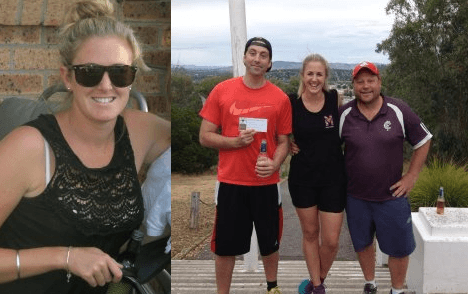
“I went from heaviest-ever after leaving the beach to addicted to Lonedog’s bootcamp—surviving that brutal first fitness test, learning more from Shannon and Cheryl than my PE degree, boosting my netball speed and strength, and now chasing a bikini body with the Nutrition Group. The sore legs in Epsom salts? Totally worth it for this supportive crew!”
Days 2-3: The Soreness Hits
Welcome to DOMS (Delayed Onset Muscle Soreness). Your legs hurt going down stairs. Everything aches.
This is normal the first time you train. Your body is adapting.
What to expect:
Muscle soreness that peaks around 48 hours after your first session
Feeling awkward with movements you're learning
Wondering if you'll ever feel "normal" again (you will)
What helps:
Light movement (walking, gentle stretching)
Staying hydrated
Remembering this gets easier fast
At Lonedog, we adjust your second and third sessions based on how your body responded to day one. We're not trying to destroy you—we're building you up progressively.
Days 4-7: The First Pattern Emerges
By the end of week one, something shifts.
The drive to the gym doesn't feel as scary. You recognise a few faces. You remember where the equipment is. Your body starts to understand the movements.
Week 1 wins:
You showed up (that's 90% of the battle)
You survived the soreness (trust me — it’s only every a problem when you start out)
You learned 3-5 foundational workouts in our MPE group classes.
You proved to yourself you can do this
You have made some ‘gym friends’ who greet you when you arrive.
Important: Don't worry about how much weight you're lifting or how fast you're moving. Week one is about showing up and learning the basics. Nothing more.
Week 2: Building the Foundation
Week two is where most people either quit or commit. You've survived the newness. Now comes the test: making it a habit.
The Confidence Paradox
Confidence doesn't create action. Action creates confidence.
“I'll start exercising when I feel more confident.”
“I'll join a gym when I'm less self-conscious.”
“I'll try new things when I believe in myself more.”
This backward thinking keeps people stuck forever.
Every time you act despite fear, you build evidence of your capability. Every time you show up when you don't want to, you prove your reliability to yourself.
Week two is about taking action before you feel ready. The confidence catches up later.
What You're Actually Learning
Week two isn't just about exercises. You're learning:
Body Awareness
How different movements feel in your body
The difference between good muscle fatigue and concerning pain
What “full effort” actually feels like (probably less intense than you think)
Movement Patterns
Hinge (deadlift pattern)
Squat (sitting/standing pattern)
Push (pressing away)
Pull (bringing toward you)
Carry (moving with load)
Shifting (moving weight through the field of gravity)
Ground 2 Stand (level changing activities for longevity)
These aren't just gym exercises. These are how humans move in real life.
Your Baseline
How your body feels on good days vs. challenging days
How much recovery you need between sessions
How to adjust the next session if, for example, the kids kept you up at night.
What time of day works best for your energy
The “I Don't Know What I'm Doing” Feeling
Week two is when impostor syndrome hits hardest.
Everyone else seems to know exactly what they're doing. You're still asking questions about everything. You feel like you're the only one who doesn't belong.
The best part is knowing that everyone in that gym started as a beginner. Everyone felt lost at first. The difference between them and you is time.
At gyms like Lonedog, you're not expected to figure it out alone. We're coaching you through every session. Questions aren't annoying, we welcome them, they are an essential part of the Lonedog community.
Week 3: The Habit Takes Hold
Week three is where magic starts happening. Not physical transformation magic (that takes longer). Identity magic.
The Shift from “Trying” to “Training”
Something changes around day 15-20.
You stop thinking “Should I go to the gym today?” and start thinking “What time is my session?”
The gym becomes part of your routine, like getting coffee or checking your phone. You're not trying to be someone who works out. You ARE someone who works out.
This identity shift is more important than any physical change. Because once you see yourself as someone who trains, the behavior follows naturally.
Progress You Can Actually See
Week three is when the first real progress shows up:
Physical Changes:
Movements feel smoother
Soreness decreases (your body is adapting)
You can feel muscles engaging during exercises
Energy levels improve throughout the day
Mental Changes:
Walking into the gym feels normal, not scary
You remember the movements without constant cueing
You notice when something feels “off” in a movement
You're less concerned about what others think
Confidence Markers:
Asking questions without feeling embarrassed
Saying hello to other members
Correcting your form
Knowing where things are
Progress You Can Actually See
Around week three, you'll have your first real test.
Bad day at work. Didn't sleep well. Feeling stressed. Every excuse to skip training seems valid.
This is THE moment. Not the Instagram moment. The real one.
Beginners at Lonedog learn that some days you need to push. Some days you need to back off. But you always show up.
We'll adjust your session based on your readiness. Maybe it's a lighter day focused on movement quality. Perhaps you need stress relief through harder work. The program adapts to you—but you still show up.
This is how sustainable fitness works in when you live in Albury-Wodonga, where you're juggling real life—work, family, stress, unpredictable schedules, the extreme heat, the shocking colds during winter.
Whatever life throws at us, we know we have the tools to make this work.
Week 4: Measuring Real Progress
By week four, you're no longer a complete beginner. You're a developing trainee.
What “Progress” Actually Means
Forget the scale. Forget the mirror. Week four progress looks different:
Movement Quality
Squatting deeper with better control
Feeling your glutes engage during deadlifts
Pressing without shoulder discomfort
Moving through exercises with confidence
Capacity Changes
Recovering faster between sets
Completing sessions without exhaustion
Sleeping better
Having more energy in daily life
Psychological Progress
Gym anxiety has disappeared
You look forward to training
You notice when you miss a session
You're curious about progression
The 30-Day Check-In
At Lonedog, we don't wait for arbitrary timelines. But around day 30, it's valuable to reflect on the journey.
Questions to ask yourself:
How has your energy changed?
What movements feel natural now that felt foreign on day one?
What surprised you about this process?
What are you most proud of?
For most beginners in Albury-Wodonga, the answers aren't about weight loss or muscle gain.
They're about feeling capable again. About proving to themselves they could commit to something. About building confidence through consistent action.
Common 30-Day Milestones
Here's what's realistic after one month:
Physical:
Noticeable improvement in how movements feel
Better energy throughout the day
Improved sleep quality
Reduced aches and pains from daily life
Clothes might fit differently (even if weight hasn't changed)
Performance:
Can complete full training sessions comfortably
Starting to add load or complexity to exercises
Recovery time between sessions has decreased
Form is solid on foundational movements
Mindset:
Gym is part of your routine
You know what you're doing (mostly)
You're not scared to ask questions
You actually miss it when you can't go
What's NOT realistic:
Dramatic body transformation
Massive strength gains
Mastery of complex skills
Instagram-worthy before/after photos
Those take 3–6 months. Week four is about foundation-building, not finished products.
The Beginner Advantage: New Gym Goers In Albury or Wodonga
Starting your fitness journey in regional Australia comes with unique benefits.
Community Over Competition
In Albury-Wodonga, gym culture is different than in major cities.
Big-city gyms often breed competition and comparison. Everyone's chasing the next level, posting their PRs, treating the gym like a photo shoot.
Here? It's different. Gyms like Lonedog are genuinely community-focused. When you walk in, people know your name. When you hit a milestone, the whole gym cheers. When you struggle, someone notices and helps.
That matters more than fancy equipment or 24/7 access.
Active Lifestyle Integration
Beginners in the Riverina area aren't just training for gym performance.
You're training to feel better on Murray River hikes. To keep up with your kids at the park. To not hurt after a day of physical work. To play weekend sport without injury.
At Lonedog, we understand this. Your program isn't about impressing anyone. It's about supporting the active life you want to live in Albury-Wodonga.
The Local Weather Factor
Let's talk about something big gyms ignore: Albury's climate affects your training.
Summer (Dec-Feb):
Heat impacts recovery and energy
Hydration becomes critical
Morning sessions often work better
Outdoor activities increase (we account for this)
Winter (Jun-Aug):
Cold mornings require longer warm-ups
Less outdoor activity means gym consistency matters more
Your body might feel stiffer initially
Energy patterns shift
As locals, we train in the same conditions. Your program accounts for seasonal realities, not some idealised training schedule from a Sydney-based franchise.
Realistic Pace for Regional Life
Albury-Wodonga life doesn't follow the same pace as Melbourne or Sydney.
You might be a tradie starting before dawn. A parent juggling school runs. A shift worker with an unpredictable schedule. Someone commuting between Albury and Wodonga for work.
Big-box gym programs assume you have unlimited time and energy. We build programs for real humans with real constraints in regional Australia.
Avoiding Common Beginner Mistakes
Let's address the mistakes that derail most beginners—so you don't waste time learning the hard way.
Mistake #1: Doing Too Much Too Soon
The number one beginner mistake: thinking more is better.
You feel motivated. You want results fast. So you train six days a week, push through pain, ignore recovery signals.
The result? You burn out in week three. Or you get injured. Or you lose motivation when your body can't keep up.
The better approach: Start with 2-3 sessions per week. Master the basics. Let your body adapt. Add volume slowly over months, not days.
The beauty about how we train at Lonedog is how we collect data to see what everyones body is doing.
We know before you do if you are getting close to ‘burn out’ and will guide you on how to adjust the workouts to suit your capacity TODAY.
Mistake #2: Comparing Yourself to Others
You'll see people in the gym doing impressive things. Lifting heavy weights. Moving with perfect form. Looking fit and confident.
Remember: you're seeing the result of YEARS of work. You're comparing your day one to their day 1,000.
Instead, compare yourself to last week's version of you. Are movements smoother? Recovering faster? Confidence higher? That's still progress.
Mistake #3: Ignoring Your Body's Signals
New trainees often can't distinguish between:
Muscle fatigue vs. joint pain
Challenge vs. harm
Need for rest vs. resistance to effort
This is a skill you develop over time. But early on, err on the side of caution.
At Lonedog, we teach you to listen to your body:
What does productive muscle fatigue feel like?
What does concerning pain signal?
When should you push vs. when should you back off?
Body awareness is as important as the exercises themselves.
Mistake #4: Skipping the Fundamentals
Everyone wants to do the cool exercises they see on Instagram.
But the basics aren't boring—they're essential. Squatting, hinging, pushing, pulling, carrying, shifting and getting down and off the ground. These patterns build the foundation for everything else.
The truth is, six months of mastering fundamentals will take you further than six months of randomly trying advanced exercises you see on Instagram.
Mistake #5: Not Asking for Help
The worst thing you can do as a beginner is to struggle in silence because you're embarrassed to ask questions.
At Lonedog, asking questions isn't annoying—it's expected. We'd rather answer 100 “stupid” questions than watch you develop bad habits or get injured.
Questions to always ask:
“Can you check my form on this?”
“This doesn't feel right—is that normal?”
“Should I push through this or stop?”
“What should I focus on during this movement?”
What Happens After Day 30?
The first month is just the beginning. Here's what the next phase looks like.
Months 2-3: Building Capacity
Once the foundation is solid, we start adding:
More load to movements
More complex exercises
Increased training density
Targeted progressions toward your goals
You'll notice strength gains. Body composition changes. Movement becomes second nature.
Months 4-6: Seeing Transformation
This is when people start commenting. “Have you been working out?”
Yes. For six months. That's how long real change takes.
Realistic 6-month outcomes:
Significant strength increases
Visible body composition changes
Mastery of fundamental movement patterns
Developed gym community relationships
Fitness is a non-negotiable part of life
The Long Game
Fitness isn't a 30-day challenge. It's a lifestyle.
The people who succeed aren't those who start with perfect motivation. They're those who build systems that work for their life.
At Lonedog, we're not trying to transform you in 30 days. We're teaching you how to train for 30 years.
Frequently Asked Questions
Absolutely. Gyms like Lonedog are built for people exactly like you. We meet you at your current fitness level—whether that's "haven't exercised in 10 years" or "played sport until recently." Your program starts where YOU start, not where some generic program assumes you should be.
Depends on what "results" means to you. Energy improvements and better movement quality show up in 2-3 weeks. Strength gains become noticeable in 6-8 weeks. Body composition changes take 8-12 weeks. The timeline varies based on consistency, nutrition, recovery, and your starting point.
Start with what you CAN commit to. Two sessions per week will still produce results—just at a slower pace. The worst thing you can do is commit to an unsustainable schedule, burn out, and quit. Better to train twice a week for six months than four times a week for six weeks.
No. At any given time, there are multiple beginners at different stages. Everyone remembers what it's like to start. The culture at Lonedog is supportive, not judgmental. You're training alongside people at all levels—and everyone's focused on their own progress, not yours.
Comfortable clothes you can move in. Athletic shorts or leggings, t-shirt, athletic shoes with flat soles (running shoes work fine initially). Don't overthink it. You don't need expensive gym gear to start.
This is the most common question—and it's backwards. The gym is WHERE you get in shape. You don't need to be fit to start. You need to start to become fit. We'll meet you exactly where you are.
Plan for 60-75 minutes total: 5-10 minutes arriving and getting settled, 45-60 minutes training, 5-10 minutes cooling down and leaving. As you get more efficient, sessions might run shorter.
That's completely normal. Book a complimentary consultation first.. Come chat with a coach, see the space, ask questions. No workout, no pressure. Just conversation. Once you see that it's a welcoming environment with real people, the anxiety drops significantly.
Ready to Start Your First 30 Days?
Starting a fitness journey is genuinely hard. Not because the exercises are complicated—but because taking that first step requires courage.
If you're in Albury-Wodonga and ready to start, here's what you need to know:
Week 1: You'll be nervous. That's okay. We'll meet you where you are.
Week 2: You'll doubt yourself. We'll remind you why you started.
Week 3: You'll build momentum. We'll help you maintain it.
Week 4: You'll realise you're not a beginner anymore. You're someone who trains.
At Lonedog, we've walked this path with hundreds of beginners.
We know what you're feeling before you walk through the door. And we're here to guide you through every step of your first 30 days—and beyond.
Your Next Step
Stop waiting to feel ready. Stop waiting to “get in shape first.” Stop waiting for perfect conditions.
Book an intro session at Lonedog. Come in, meet the team, see the space. No workout. No pressure. Just honest conversation about your goals and whether we're the right fit.
The hardest part isn't the training. It's deciding to start.
Make that decision today.
Your first 30 days begin whenever you're ready to take that first step.
Book A Complimentary Consultation
Fill out the form below, and we will be in touch with you in 24 hours.